

Gabbro

Physical and Technical Properties of Black Gabbro Stone
| Density and volumetric weight | 2950 kg/m³ |
| Water absorption | 0,11% |
| Compressive strength | 280 MPa |
| Flexural strength | 50 MPa |
| Abrasion | 0.58 g/cm² |
| Commercial name | Gabbro |
| Place of birth | Bukinskoe, Kamennobrodskoe |
| Quarry location | Ukraine, Zhytomyr region |
| Stone type | Gabbro |
| Price tiles 600×300×20 mm polished | 43 EUR/m² |
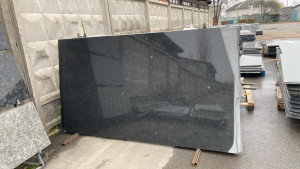
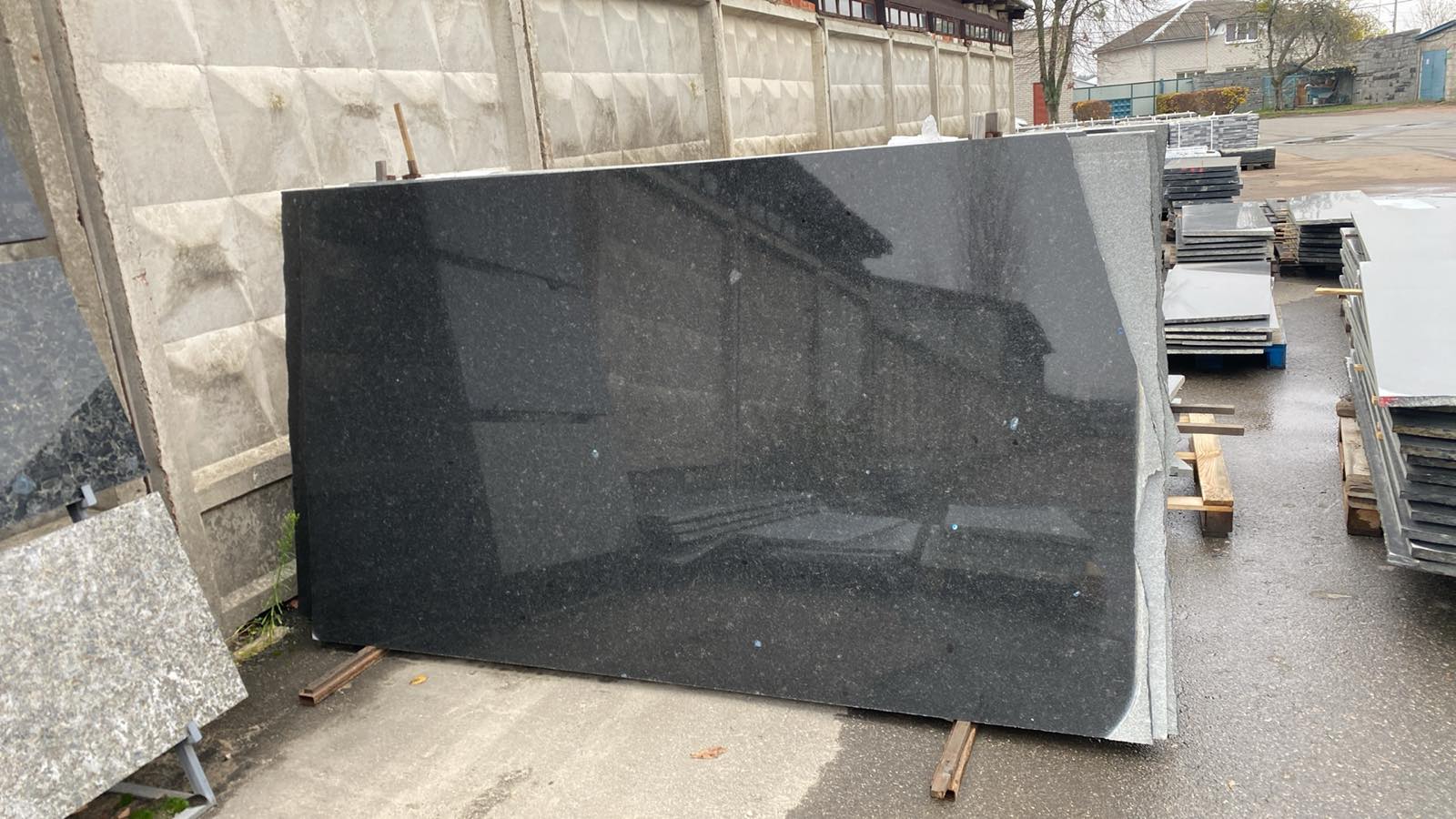
Gabbro is one of the darkest natural stones available in Europe. Its deep black color, exceptional strength, and outstanding resistance to weathering make it an excellent choice for paving, stairs, façades, countertops, and memorial architecture. We manufacture our products directly in Ukraine and supply them throughout Europe.

Why Choose Black Gabbro Stone?
Natural black granite deposits are extremely rare in Central Europe, where most locally available stones have grey shades. If you are looking for a truly black natural stone rather than conventional grey granite, Ukrainian Gabbro is the ideal solution. It combines an intense black color with excellent mechanical properties and long-term durability.

100% Eco-Friendly
Natural stone with a low carbon footprint

EN Certified
Complies with EN 1341, EN 1342, and EN 1343 standards

Frost Resistant
Designed to withstand repeated freeze–thaw cycles

High Strength
Excellent resistance to abrasion and heavy vehicle loads
Surface Finishes Available for Black Gabbro
- Polished: A deep black surface with a mirror-like finish. Ideal for façades, interior window sills, countertops, and memorial applications.
- Flamed: A rough, slip-resistant surface created by thermal treatment. Recommended for outdoor paving, staircases, terraces, and entrance areas.
- Bush-Hammered: A textured finish with maximum slip resistance. Suitable for high-traffic public spaces and exterior applications.
- Honed: A smooth, matte surface without gloss. An excellent choice for minimalist interiors and natural stone floor tiles.
01
Honed surface
02
Polished surface
03
Bush-Hammered surface
04
Flamed surface
Products We Manufacture from Black Gabbro
Split Cobblestones


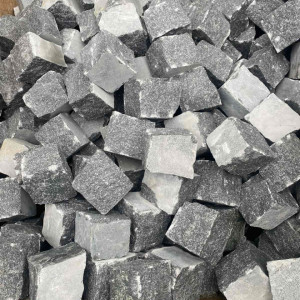


Sawn & Split Cobblestones
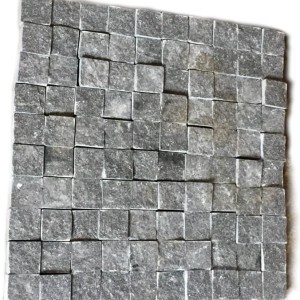
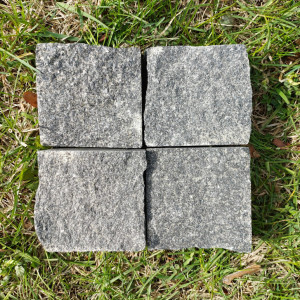
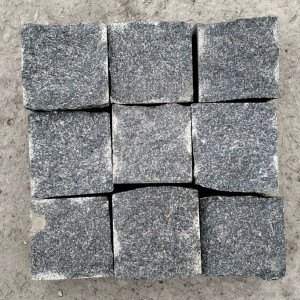
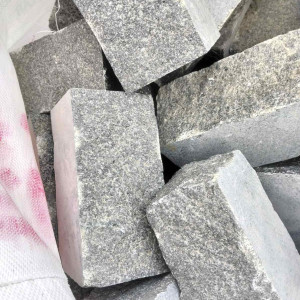


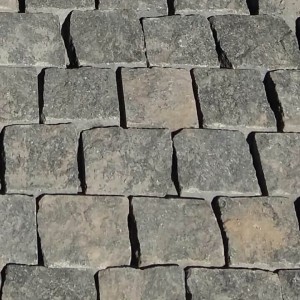

Sawn Cobblestones
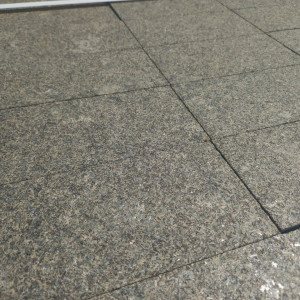

Tumbled Cobblestones


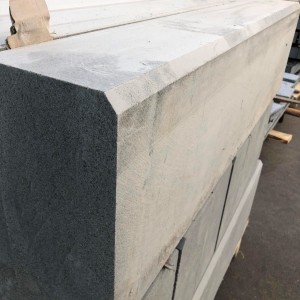
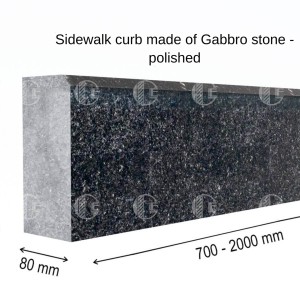
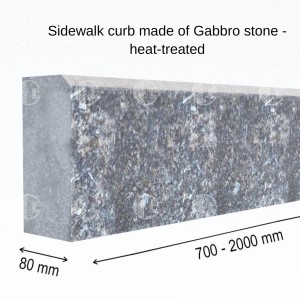
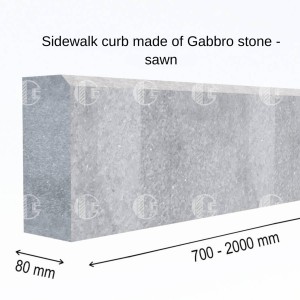
Granite Kerbs
Reliable Logistics and European-Standard Packaging
We manufacture our products in Ukraine and deliver them across Europe.
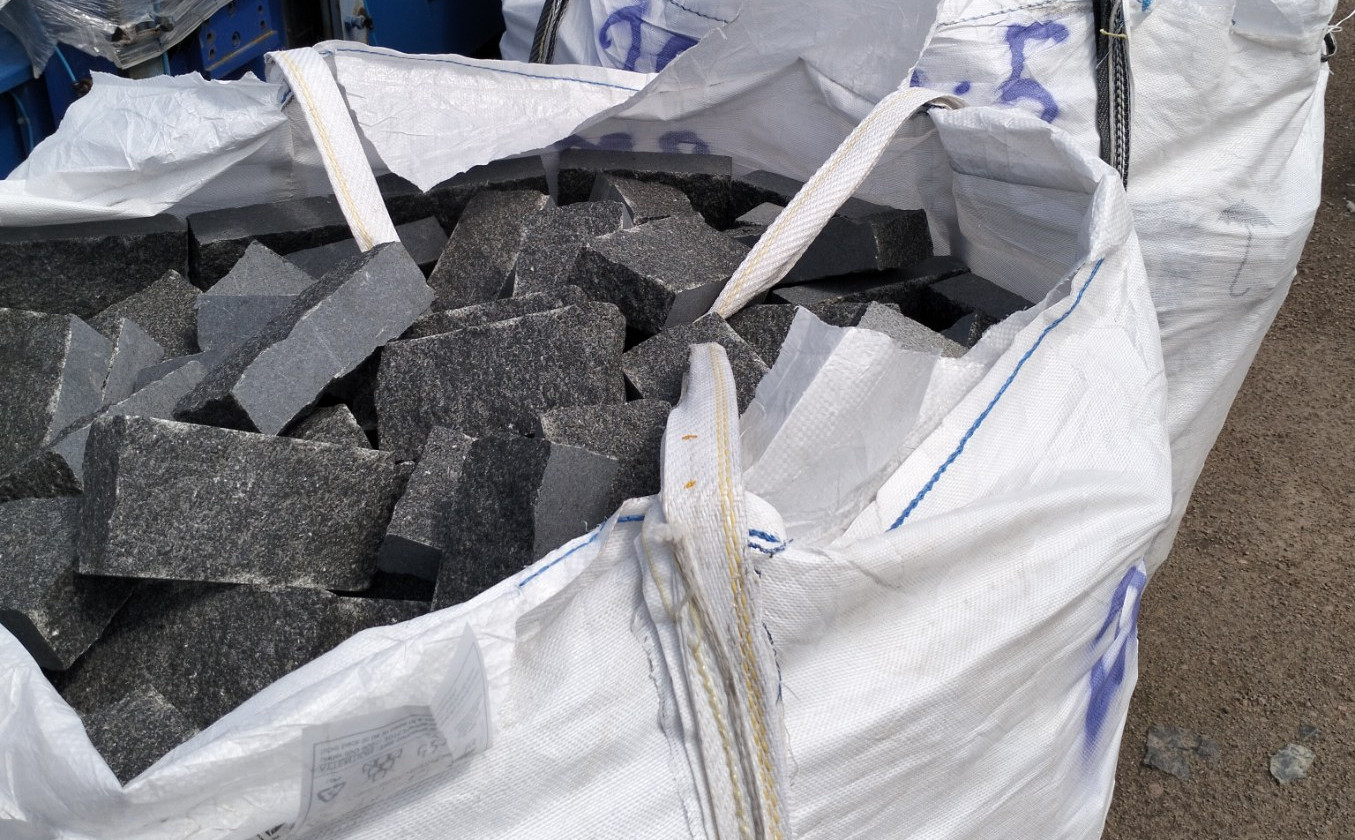
📦 Export Packaging
Every product is packed according to international export standards. Tiles, steps, and slabs are secured in robust wooden crates, while cobblestones and decorative stone are packed in durable Big Bags.
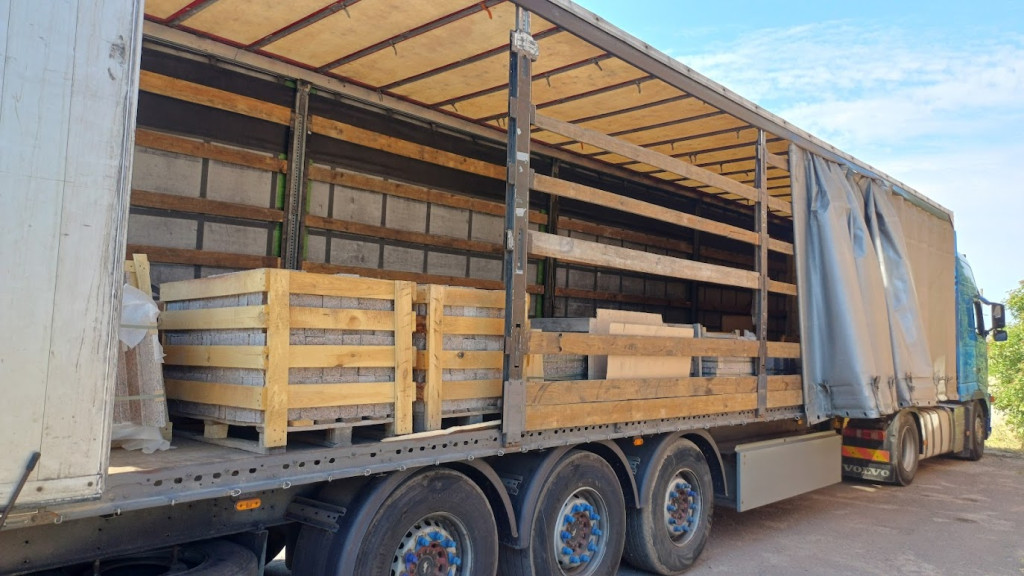
🚛 Logistics & Documentation
We assist with arranging both full truck loads (FTL) and groupage transport (LTL) depending on your order. We also provide the complete set of export and customs documentation required for smooth import clearance in your country.